
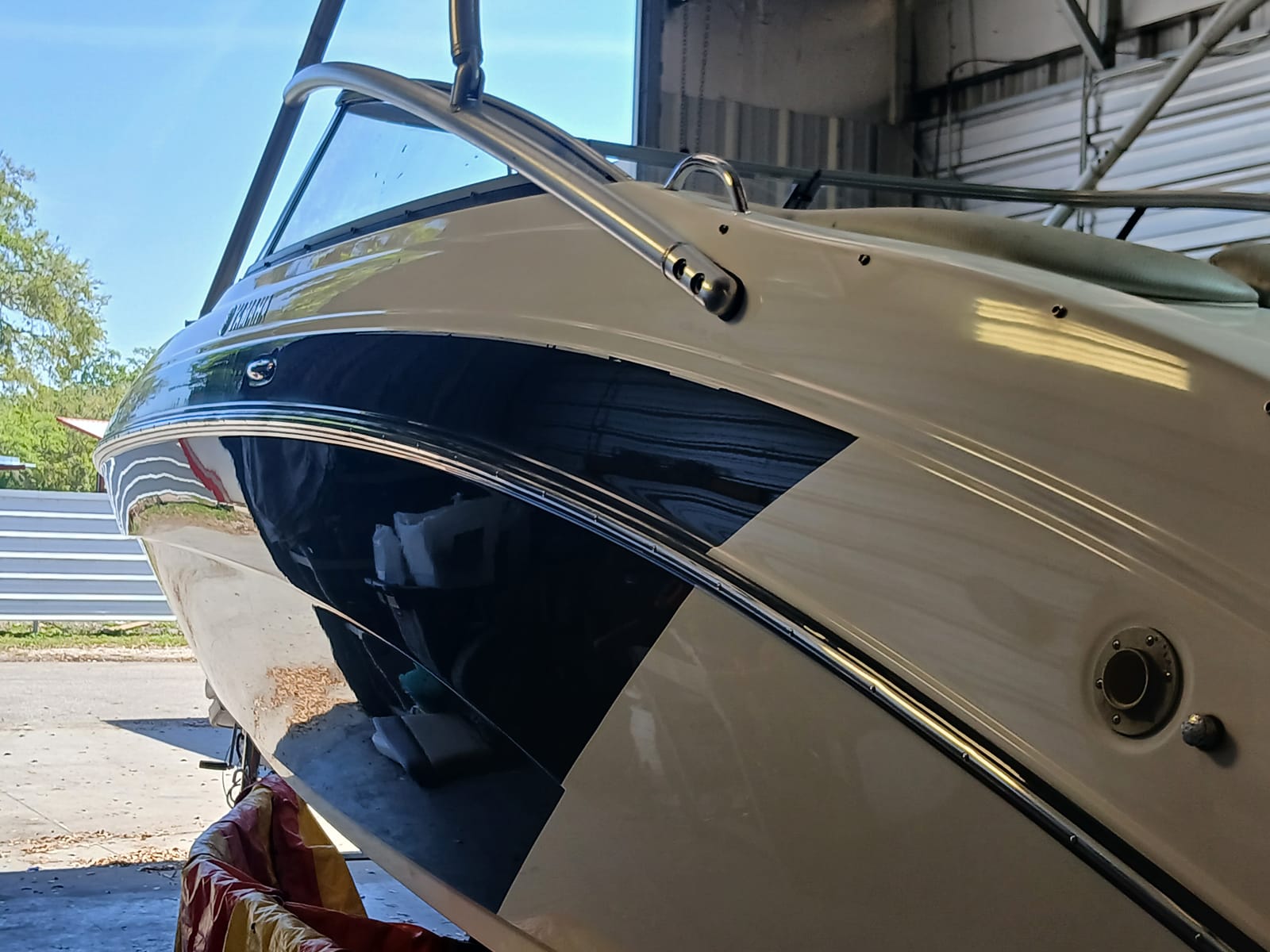
If your hull leaves chalk on your hand, it needs oxidation removal. It helps to know what that work actually involves, so you understand the quote, the time frame, and what the result can and cannot be. This guide walks through the process the way a detailer approaches it.
Short answer
How do detailers remove oxidation from a boat?
Detailers remove oxidation from gelcoat in stages. They wash and inspect the hull, test how heavy the oxidation is, machine compound to cut away the chalky layer, polish to bring back gloss and clarity, and finish with wax, sealant, or ceramic coating. The heavier the oxidation, the more passes and time it takes.
What you are looking at
Gelcoat is the colored resin layer on the outside of a fiberglass boat. Oxidation is that layer breaking down at the surface from UV light, salt, and heat. The damaged layer is porous and chalky, and it scatters light instead of reflecting it. That is why an oxidized hull looks flat, faded, and dull even after a wash.
Under the damaged layer is healthy gelcoat. Oxidation removal is the work of taking off just enough of the dead layer to reach it, then refining and protecting the surface.
Step 1: wash and decontaminate
Polishing a dirty hull grinds dirt and salt into the gelcoat and creates new scratches. So the first step is always a thorough wash. Waterline stains, scum lines, and exhaust soot are cleaned off too, because they hide the true condition of the gelcoat.
Step 2: inspect and test
With the hull clean, the oxidation can be judged properly. Detailers usually group it into three levels:
- Light: a dull haze. Color is mostly intact. Often fixed with a polish alone.
- Moderate: noticeable fading and some chalk. Needs a compound, then a polish.
- Heavy: chalky, deeply faded, rough to the touch. Needs more aggressive cutting and more passes.
Step 2, continued: the test spot
Before working the whole hull, a detailer often tests a small area to find the gentlest combination of compound and pad that gets the result. That keeps the amount of gelcoat removed to a minimum. It is also when any limits show up, like gelcoat that is worn very thin or crazed.
This is why the Doctor looks at the boat before he quotes. The level of oxidation decides how long the job takes and what it costs.
Step 3: compound
Compound is an abrasive liquid used with a machine polisher and a cutting pad. It cuts away the dead, oxidized layer and exposes the healthy gelcoat underneath. This is the heavy lifting of the job. Each section of the hull is worked until the chalk is gone and the color comes back.
On a heavily oxidized boat, this step can take more than one pass, and it is where most of the hours go.
Step 4: polish
Compounding removes oxidation but leaves the surface slightly hazy from the abrasive. Polishing with a finer product and a softer pad refines the surface. This is the step where the deep gloss and clarity return, and where the color looks rich again.
Step 5: protect
Freshly polished gelcoat is clean and bare. Without protection, the sun starts breaking it down again right away. The job is not done until the gelcoat is protected:
- Marine wax or sealant: quick, affordable, needs refreshing often in Florida.
- Ceramic coating: the longest-lasting option. The Doctor is a certified Ceramic Pro and System X installer.
What decides the time and cost
Three things set the scope of an oxidation job: the size of the boat, how heavy the oxidation is, and how much of the boat you want done. A small center console with light haze is a very different job from a large boat with heavy chalk on every surface.
Where the boat sits matters too. On a trailer or stands, the whole hull is reachable. On a lift or at a slip, some areas may be harder to reach. Tell the Doctor how the boat is kept when you ask for a quote.
Oxidation, stains, or scratches?
Not every dull hull is oxidized, and the fix depends on what you are looking at.
Oxidation is chalky and leaves residue on your hand. It covers wide areas, usually worst on the surfaces that face the sun.
Stains sit on the surface: a brown waterline, exhaust soot on the transom, rust streaks from hardware. They are cleaned off with the right cleaner, not polished.
Scratches and swirls are fine marks you see in direct light, often from cleaning with dirty brushes or towels. Polishing removes them, and they show up most on dark gelcoat.
Many boats have all three. A good plan handles each one with the right method, in the right order.
Why the machine matters, and the hands on it
A machine polisher is what makes oxidation removal possible on a whole hull, but it can also do damage. Too much pressure, too aggressive a pad, or too long on one spot builds heat and can cut through thin gelcoat, especially on edges, corners, and molded lines where the gelcoat is thinnest.
Experience shows in how the detailer handles those areas: lighter passes on edges, testing first, and checking the surface as they go. It is one of the reasons oxidation removal is worth handing to someone who does it regularly.
When compounding is not enough
Very heavy oxidation can be beyond what compounding alone can fix. In those cases the surface needs more aggressive work before the polishing steps, which adds time and cost. It is also a sign the gelcoat has been unprotected for a long time.
If your hull is past what compounding can fix, the Doctor tells you before any work begins, so there are no surprises on the quote.
White hulls and colored hulls
White gelcoat hides a lot. It can be fairly oxidized before it looks bad, and it forgives fine polishing marks. Colored and dark gelcoat is the opposite. It shows fading sooner and shows every swirl mark in the sun, so the final polishing step needs extra care to leave a clean, deep finish.
Colored hulls also benefit most from strong protection afterward, because fading on them is so easy to see.
Keeping it from coming back
After all that work, the goal is to never need it again at that level. A few habits make the biggest difference:
- Protect the gelcoat right away with wax, sealant, or a ceramic coating.
- Rinse with fresh water after every saltwater trip.
- Wash on a schedule with a marine-safe soap.
- Re-protect when water stops beading.
- Cover the boat or use a covered lift when you can.
Doing it yourself vs hiring it out
Light haze on a small boat is a reasonable weekend project for an owner with a good polisher and some patience. Moderate and heavy oxidation are a different job. They take hours of machine work, the right compounds and pads, and a feel for how much gelcoat is safe to remove, especially on edges and corners.
Most owners who try a heavy job by hand end up with an uneven finish or a sore back and a half-done hull. If the chalk comes off on your hand across the whole boat, it is usually time and money well spent to have it done professionally, then keep it up yourself with washing and protection.
Questions to ask before you book
A few questions help you understand any oxidation quote, from the Doctor or anyone else:
- How heavy is the oxidation on my hull: light, moderate, or heavy?
- Will you test a small area first?
- Which surfaces are included: hull sides, topsides, transom, deck?
- What protection goes on at the end, and how long should it last here?
- How long will the job take, and can it be done where the boat sits?
How long the result lasts
The result of oxidation removal lasts as long as the protection on top of it. A hull left bare will start to dull again within a season in Florida. A hull with fresh wax needs the wax renewed often. A hull with a ceramic coating can hold its gloss far longer with regular washing.
That is why the protection step is part of the job, not an extra. The polishing gets the gelcoat back. The protection keeps it.
What to expect afterward
A well-done oxidation removal brings back gloss and color that many owners thought were gone for good. How long it stays that way depends on protection and upkeep. Rinse after salt water, wash on a schedule, and keep the protection fresh.
The photos on this page show the Doctor's finished gelcoat work. Doctor Detail does oxidation removal at your dock, driveway, or marina in Gibsonton and nearby towns. Every job starts with a free quote, and detailing takes a 30% deposit when you book.
Questions owners ask
Does oxidation removal thin the gelcoat?
It removes a small amount of the damaged surface. Testing first and using the gentlest method that works keeps that amount to a minimum.
Can every boat be restored?
Most can be improved a lot. Gelcoat that is worn through, crazed, or cracked has limits. The Doctor tells you what to expect before you book.
Should I coat right after oxidation removal?
It is the best time to. The gelcoat is corrected and clean, so the coating locks in the best possible finish.