
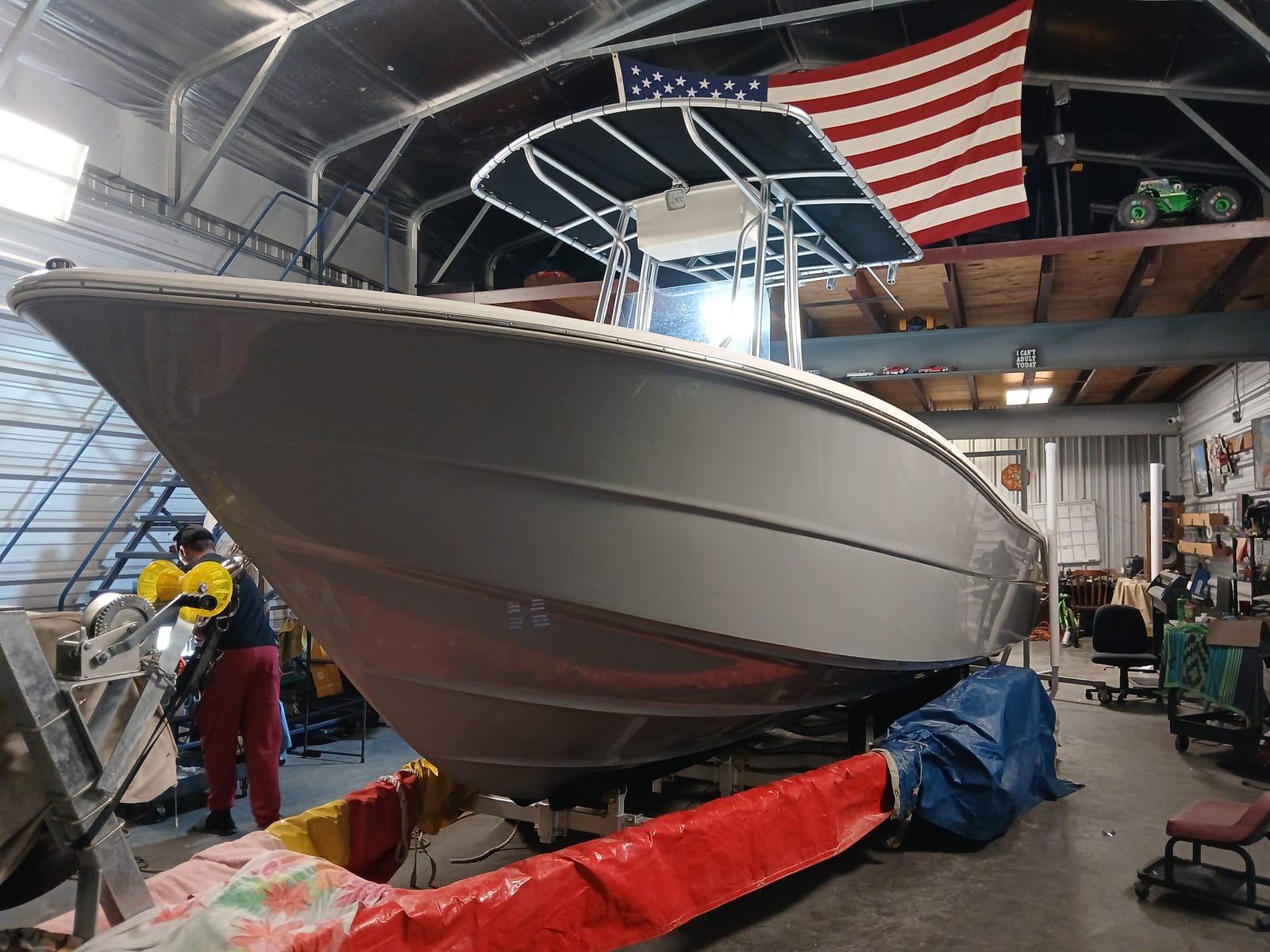
Oxidation is the number one reason a boat looks older than it is. It is not dirt, and it does not wash off. Knowing what causes it is the first step to keeping it off your hull.
Short answer
Why does gelcoat turn chalky?
Boat oxidation is caused mainly by UV light breaking down the surface of the gelcoat. Salt, heat, and pollution speed it up, and missing wax or coating leaves the gelcoat exposed. The result is a chalky, faded finish. It can be polished off and then prevented with regular protection.
The sun does most of the damage
Gelcoat is a pigmented resin. Ultraviolet light slowly breaks down the resin at the surface. Over time, that top layer turns porous and chalky, and it stops reflecting light. In Florida, where the sun is strong most of the year, it happens faster than in northern waters.
Salt and heat speed it up
Dried salt holds moisture against the surface and adds to the wear. Heat makes everything work faster. A boat that sits in the water in the summer sun, with no protection, can go from glossy to dull in a season.
Salt removal is part of keeping oxidation away, not just a cleanliness step.
How to spot it early
Look for these signs before the hull gets chalky:
- The hull looks flat or hazy in photos
- Colors fade, and white gelcoat yellows
- Water stops beading on the hull
- Your hand comes away white after you touch the hull
Why some boats oxidize faster
Two boats of the same age can look very different. The one that sits in the water uncovered, faces the sun at the slip, and rarely gets waxed will oxidize far faster than one on a covered lift that is washed and protected on a schedule. Color plays a part too: dark gelcoat shows fading sooner than white.
How to slow it down
Keep the gelcoat protected. Wax, sealant, or ceramic coating takes the UV exposure in place of the gelcoat. Wash regularly, rinse after salt water, and cover the boat when you can. When oxidation has already set in, oxidation removal polishes it off so the protection can go on.
Related questions
Does oxidation damage the boat?
It wears away the surface of the gelcoat. Caught early, it polishes off. Left for years, it can thin the gelcoat and limit what polishing can restore.
Do dark hulls oxidize faster?
Dark gelcoat absorbs more heat and shows fading sooner, so oxidation on a dark hull is often easier to see.