
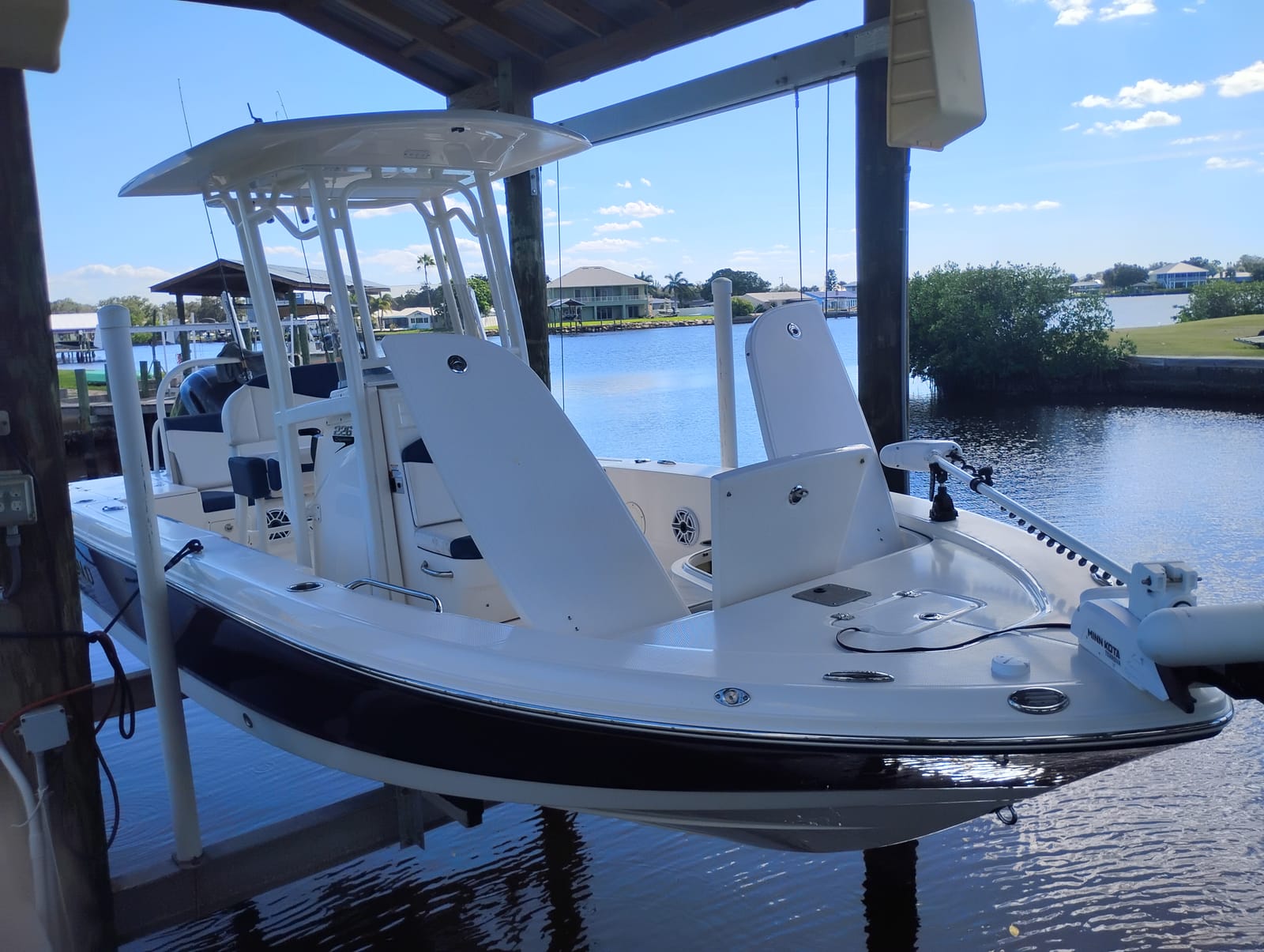
Tampa Bay is a great place to own a boat and a hard place to keep one looking new. Strong sun most of the year, salt water, heat, and humidity all work on your boat at once. This guide explains what each one does, where the damage shows up first, and what actually slows it down.
Short answer
What damages a boat finish in Florida?
In Florida, UV light is the main thing that damages a boat finish. It breaks down gelcoat into a chalky, faded layer called oxidation. Salt water speeds that up and attacks metal and vinyl, while heat and humidity add mildew and staining. Regular washing and protection with wax or ceramic coating slow all of it down.
Why Florida is harder on boats
A boat in a northern lake might see a few months of strong sun and then spend the winter under shrink wrap. A boat in Tampa Bay often sees strong sun nearly year round, and many stay in the water or on an open lift the whole time. There is no off season for the finish.
Add salt water, summer heat, and humidity that rarely drops, and every material on the boat ages faster here. Gelcoat oxidizes, vinyl dries out and cracks, stainless steel stains, and canvas mildews. None of it happens overnight, which is exactly why it is easy to miss until it is advanced.
What UV light does to gelcoat
Gelcoat is the hard, colored outer layer on a fiberglass boat. It is a resin with pigment in it, and it is what gives your hull its color and its shine. Ultraviolet light slowly breaks down that resin at the surface.
As the top layer breaks down, it turns porous and rough at a microscopic level. Light scatters instead of reflecting, so the hull looks dull. The color fades. White gelcoat often turns yellow or gray, and dark hulls look milky. Eventually the surface turns chalky enough that it rubs off on your hand. That chalk is oxidation.
The important thing to know is that oxidation is a surface problem first. Caught early, the dead layer can be compounded and polished away to reveal healthy gelcoat underneath. Left for years, it keeps eating into the gelcoat, and there is less good material left to restore. See oxidation removal for how it is fixed.
What salt water does
Salt does its damage after the water evaporates. Dried salt crystals pull moisture out of the air, so a salty boat stays slightly damp even on a dry day. That salty film is what causes most of the trouble.
- On gelcoat, it speeds up oxidation and leaves a dull film.
- On stainless steel, it causes brown surface staining, often called tea staining.
- On aluminum and chrome, it leads to pitting and corrosion.
- On vinyl and canvas, it collects in seams and stitching and holds moisture there.
- On electrical connections and hardware, it adds to corrosion over time.
Heat and humidity: the supporting cast
Heat makes everything happen faster. A dark hull in the summer sun gets hot to the touch, and that heat speeds up the breakdown of gelcoat and the drying of vinyl. Wax and sealants also wear away faster in the heat.
Humidity gives mildew what it needs. Seat seams, compartments, and canvas that never fully dry are where it starts. Once mildew stains vinyl deeply, it may never fully come out, so preventing it is far easier than removing it.
Where damage shows up first
Some parts of a boat get hit harder than others. Check these first when you are deciding whether your boat needs attention:
- Horizontal surfaces that face the sky: the deck, the bow, the top of the gunwales, and the console.
- The side of the hull that faces the sun when the boat is tied up.
- Stainless rails, cleats, and hardware, especially at the bases.
- Vinyl seats, especially the tops and the seams.
- The waterline, where stains collect.
Simple tests you can do yourself
You do not need special tools to check your boat. Run a clean hand across the hull: if it comes away white or chalky, the gelcoat is oxidized. Spray water on the hull: if it beads into tight drops, your wax or coating is still working; if it sheets off or sits flat, protection is gone.
Look at the hull at an angle in the sun. A healthy finish reflects clearly. An oxidized one looks hazy or flat. On stainless, look for brown spots near welds and bases. On vinyl, look at the seams for dark spots or stiffness.
What slows the damage down
You cannot stop the sun or keep the boat out of salt water. You can make sure the damage hits something other than the gelcoat. That is the whole idea behind protection.
Marine wax and synthetic sealants put a sacrificial layer on top of the gelcoat. UV and salt wear away the wax instead of the finish. The catch is that in Florida, wax wears off quickly, so it needs to be reapplied often. A marine ceramic coating bonds to the gelcoat and lasts far longer, and its slick surface sheds salt and grime much more easily.
Shade helps as much as anything. A cover, a canvas top, or a covered lift blocks a large share of the sun that would otherwise reach the gelcoat and vinyl.
Habits that make the biggest difference
The habits that protect a boat are not complicated. Most of the difference comes from doing them consistently:
- Rinse the whole boat with fresh water after every saltwater trip.
- Wash with a marine-safe soap on a regular schedule, not just a rinse.
- Keep the gelcoat protected, and re-protect when water stops beading.
- Use a UV protectant on vinyl.
- Open compartments to dry out after use.
- Cover the boat when it is not in use, if you can.
What the sun does to vinyl and canvas
Marine vinyl is tougher than the vinyl in a car, but it is not immune. UV light breaks down the plasticizers that keep vinyl soft. Over time the seats lose their sheen, then turn stiff, then crack along the seams and the edges where people sit and step. Colors fade unevenly, so a seat back that faces the sun can look a shade lighter than the cushion below it.
Canvas tops, covers, and enclosures fade and weaken in the same sun. Stitching often fails before the fabric does, because thread takes the brunt of the UV. A UV protectant on vinyl and canvas, reapplied regularly, slows all of this down. Cleaning comes first, because protectant over salt and grime just traps them.
Stainless, aluminum, and chrome
Stainless steel is called stainless, not stain-proof. In salt air, chlorides attack the surface and leave brown spots, most often near welds, bases, and anywhere water sits. Caught early, this is surface staining that cleans and polishes off. Left alone, it can pit.
Aluminum, common on T-tops, towers, and pontoon rails, oxidizes into a dull white film and can corrode where it touches other metals. Chrome can pit and flake once salt gets under a damaged spot. Regular rinsing, cleaning, and a protectant made for marine metal keep hardware looking right and lasting longer.
Myths that cost owners money
A few common beliefs make sun and salt damage worse:
- "Rain rinses the salt off." Rain does little to dried salt in seams and texture, and it can leave water spots of its own.
- "A white boat does not oxidize." White gelcoat oxidizes too. It just hides it longer, then turns chalky and yellow.
- "More wax is better." Wax over a dirty or oxidized hull seals the problem in. Clean and correct first.
- "Household cleaners are fine." Many strip wax, dry out vinyl, or are harsh on gelcoat. Marine-safe products are worth it.
- "It only matters if I sell." Damage that is caught early costs far less to fix than damage that has had years to set in.
How a detailer reads the damage
When a detailer looks at a sun and salt worn boat, they check each material on its own. Gelcoat is checked for oxidation level and thin spots. Stainless is checked for staining versus pitting. Vinyl is checked for mildew in the seams and for stiffness. The waterline is checked for staining.
That inspection turns into a plan: what needs restoring, what only needs cleaning, and what should be protected so it does not happen again. It is also what makes a quote accurate instead of a guess.
When it is time for a professional
Rinsing and washing are owner jobs. Some work is best handed to a detailer: removing oxidation, deep salt removal from seams and hardware, and applying a ceramic coating. Those jobs take machine polishers, the right compounds and products, and time.
Doctor Detail is a mobile detailer based in Gibsonton. The Doctor does the work himself at your dock, driveway, or marina across Gibsonton, Apollo Beach, Ruskin, Riverview, and nearby towns, and he is a certified installer for Ceramic Pro and System X. Every job starts with a free quote, and detailing takes a 30% deposit to book. If your hull leaves chalk on your hand, it is a good time to call.
Questions owners ask
Does a boat cover really help?
Yes. A cover blocks sun from the gelcoat, vinyl, and deck, which slows oxidation and fading. It also keeps bird droppings and pollen off the boat.
Is fresh water boating easier on a finish?
Fresh water spares you salt damage, but the sun still oxidizes gelcoat. Protection matters on any boat that sits in the sun.
Can sun damage be reversed?
Surface oxidation can usually be compounded and polished away. Deeply worn or cracked gelcoat has limits, so it is best to act early.