
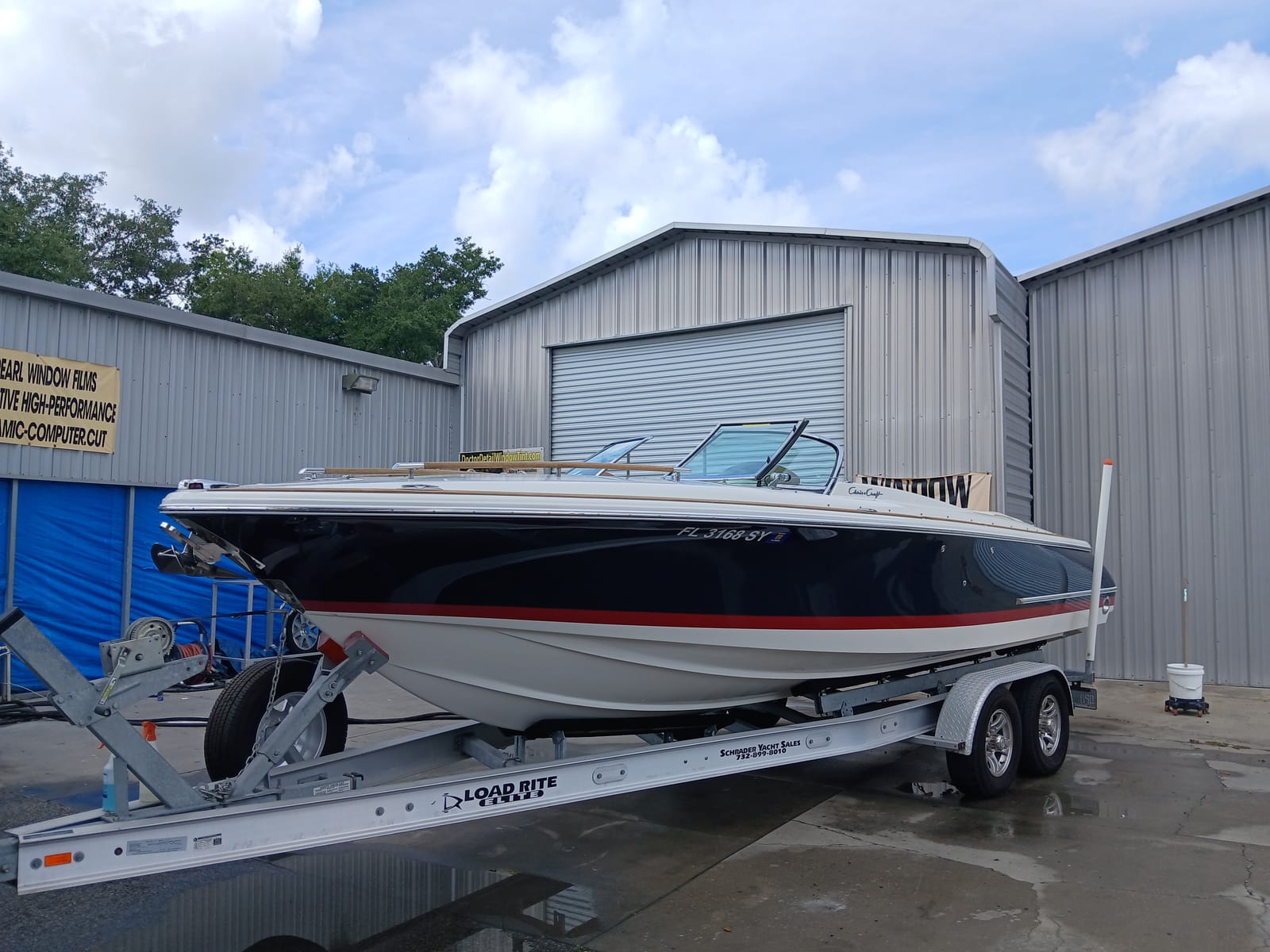
Florida does not have a boating off season, so your boat care cannot have one either. What it does have is seasons that bring different problems: pollen, lovebugs, summer storms, hurricane season, and the busy winter months. Here is a simple schedule that keeps a boat ahead of all of them.
Short answer
How should a Florida boat be cared for through the year?
A Florida boat needs a fresh water rinse after every saltwater trip, a real wash on a regular schedule, and protection checked often. Season by season, deal with spring pollen, lovebug season, summer heat and storms, and hurricane prep. Plan a full detail with polishing and protection when the gelcoat stops beading water.
After every trip
This is the habit that does the most good for the least effort. Before the boat goes back on the lift or the trailer, rinse it with fresh water from top to bottom. Get the deck, the hardware, the rails, the seats, and the hull. If the boat rides on a trailer, rinse the trailer too.
Wipe down the vinyl, open the compartments so they can dry, and take wet gear off the boat. A few minutes now keeps salt and moisture from sitting on the boat until next weekend.
On a regular schedule
A rinse is not a wash. On a regular schedule, the boat needs a proper wash with a marine-safe soap and soft brushes, especially in the textured non-skid and around hardware. How often depends on how much you run the boat and where it is kept.
This is also the time to check the protection. Spray the hull with water. If it beads, the wax or coating is working. If it sheets off, plan to re-protect soon. A maintenance wash schedule takes this off your plate.
Spring: pollen and the start of busy season
Spring brings heavy pollen in much of Florida, and it settles on every surface as a yellow film. Mixed with dew, it can stain light gelcoat and canvas if it sits. Wash it off rather than letting it bake on.
Spring is also when many owners get ready for a busy season on the water. It is a good time for a full detail: deep clean, polish, and fresh protection, so the boat starts the hottest months protected.
Lovebug seasons
Florida has lovebug flights that usually come in late spring and again in late summer. Lovebugs are mildly acidic, and when they bake onto a surface in the sun they can etch it. Boats running through a swarm and cars on the highway both collect them.
Wash them off as soon as you can. A protected surface, especially one with a ceramic coating, lets them release much more easily.
Summer: heat, sun, and afternoon storms
Summer is the hardest season on a finish. The sun is at its strongest, the heat is high, and humidity rarely drops. Wax wears off faster now than at any other time, so check protection often. Use a UV protectant on vinyl.
Afternoon storms bring heavy rain. Fresh rain does not remove dried salt well, and standing water in the boat can lead to mildew. Make sure drains are clear, and dry out compartments after a storm.
Hurricane season prep
Atlantic hurricane season runs from June 1 to November 30. Every owner should have a plan for where the boat goes if a storm threatens. From a detailing view, a clean, protected boat is easier to secure and easier to clean up after.
After a storm, wash the boat as soon as it is safe. Storm debris, salt spray, and standing water all do damage if they sit.
Fall and winter: the best boating months
Cooler, drier months are some of the best boating in Tampa Bay, and many boats run more in winter than in summer. Keep the same rinse and wash habits. Lower humidity makes this a good time to deal with any mildew that started over the summer.
It is also a smart time for big projects like oxidation removal and ceramic coating, so the gelcoat goes into the next spring and summer at its best.
A simple checklist
Here is the schedule in one place:
- Every trip: fresh water rinse, wipe vinyl, open compartments.
- Regularly: full wash with marine soap, check if water beads.
- When beading stops: re-protect with wax, sealant, or coating.
- Spring: wash off pollen, full detail before the busy season.
- Lovebug season: wash bugs off fast.
- Summer: check protection often, UV protectant on vinyl, dry out after storms.
- Hurricane season: have a plan, wash after any storm.
- Fall and winter: tackle mildew, plan oxidation removal or coating.
In the water, on a lift, or on a trailer
Where your boat lives changes the schedule more than anything else.
In the water at a slip. This is the toughest setup. The hull sits in salt water, the waterline stains, and the topsides take the sun all day. These boats need the most frequent washing and the closest watch on protection.
On a lift. Keeping the hull out of the water cuts down on staining and growth. The topsides and deck still take full sun unless the lift is covered. A covered lift is one of the best things you can do for a boat in Florida.
On a trailer. A trailered boat is easy to rinse and easy to reach for detailing, and if it is garaged it is protected from the sun. The trailer itself needs a rinse after every saltwater launch, because salt attacks the frame, the axles, and the lights.
Signs your schedule is not keeping up
If you see any of these, the boat needs more care than it is getting:
- Water no longer beads on the hull soon after a wax.
- A chalky film on your hand after touching the hull.
- A brown or yellow waterline that comes back fast.
- Brown spots on stainless rails and hardware.
- Dark spots or a musty smell in seats and compartments.
- White salt residue in the non-skid after a rinse.
A simple rinse kit to keep handy
Keeping a few things at the dock or in the truck makes the after-trip rinse easy:
- A hose with a spray nozzle, or a way to reach fresh water at the slip.
- A marine-safe boat soap.
- A soft brush on a pole for the deck and hull sides.
- Microfiber towels or a chamois for drying glass and vinyl.
- A UV protectant for vinyl.
If the boat will sit for a while
Boats that sit for weeks or months between trips need a little extra care. Wash and dry the boat fully before it sits, so salt and moisture are not left behind. Open hatches and compartments to air out if the boat is covered, or use a breathable cover. Check on it now and then, because a leak or a clogged drain can turn into mildew fast in the humidity.
When you are ready to use it again, a full wash and a check of the protection gets it back to where it should be.
Keep a simple log
A short log helps more than most owners expect. Note the date of each wash, each wax or coating, and anything you spot, like a new stain on stainless or a soft spot in the vinyl. Over a year it shows you how fast protection wears off on your boat, where it is kept, and how you use it. That makes it easy to time the next wax or full detail before the gelcoat suffers, instead of after.
It also helps when you sell. A buyer who sees a record of regular care has one less reason to worry about what they cannot see.
Washing technique matters
How you wash matters as much as how often. Rinse first to knock off loose salt and grit. Wash from the top down, so dirty water runs off instead of over clean surfaces. Use a soft brush or mitt on gelcoat, and a stiffer brush only on non-skid. Rinse often, and dry glass and vinyl so they do not spot.
Avoid household cleaners, bleach, and abrasive pads on gelcoat and vinyl. They can strip wax, dull the finish, and dry out seats. A marine-safe soap is gentle on all of it.
Who does what
A good split for most owners: you handle the after-trip rinse and the quick wipe-downs, and a detailer handles the deep work on a schedule. That includes salt removal from seams and hardware, polishing, oxidation removal, and protection. Splitting it this way keeps the boat ahead of the damage without taking over your weekends.
Let someone else keep the schedule
Not every owner has time to keep up with all of this. Doctor Detail can set up maintenance washes and full details on a schedule that fits how you use the boat. The Doctor does the work himself at your dock, driveway, or marina in Gibsonton and nearby towns. Every job starts with a free quote, and detailing takes a 30% deposit when you book.
Questions owners ask
Do I need to wash my boat if it only runs in fresh water?
Yes. Fresh water spares you salt, but sun, pollen, and grime still affect the finish. Regular washing and protection still matter.
How often should a boat get a full detail?
Plan one when the protection wears off or oxidation starts to show. Boats with a ceramic coating usually go much longer between full details.
Can you work around my boating schedule?
Yes. Tell the Doctor how often you run the boat when you call, and he plans washes and details around it.