
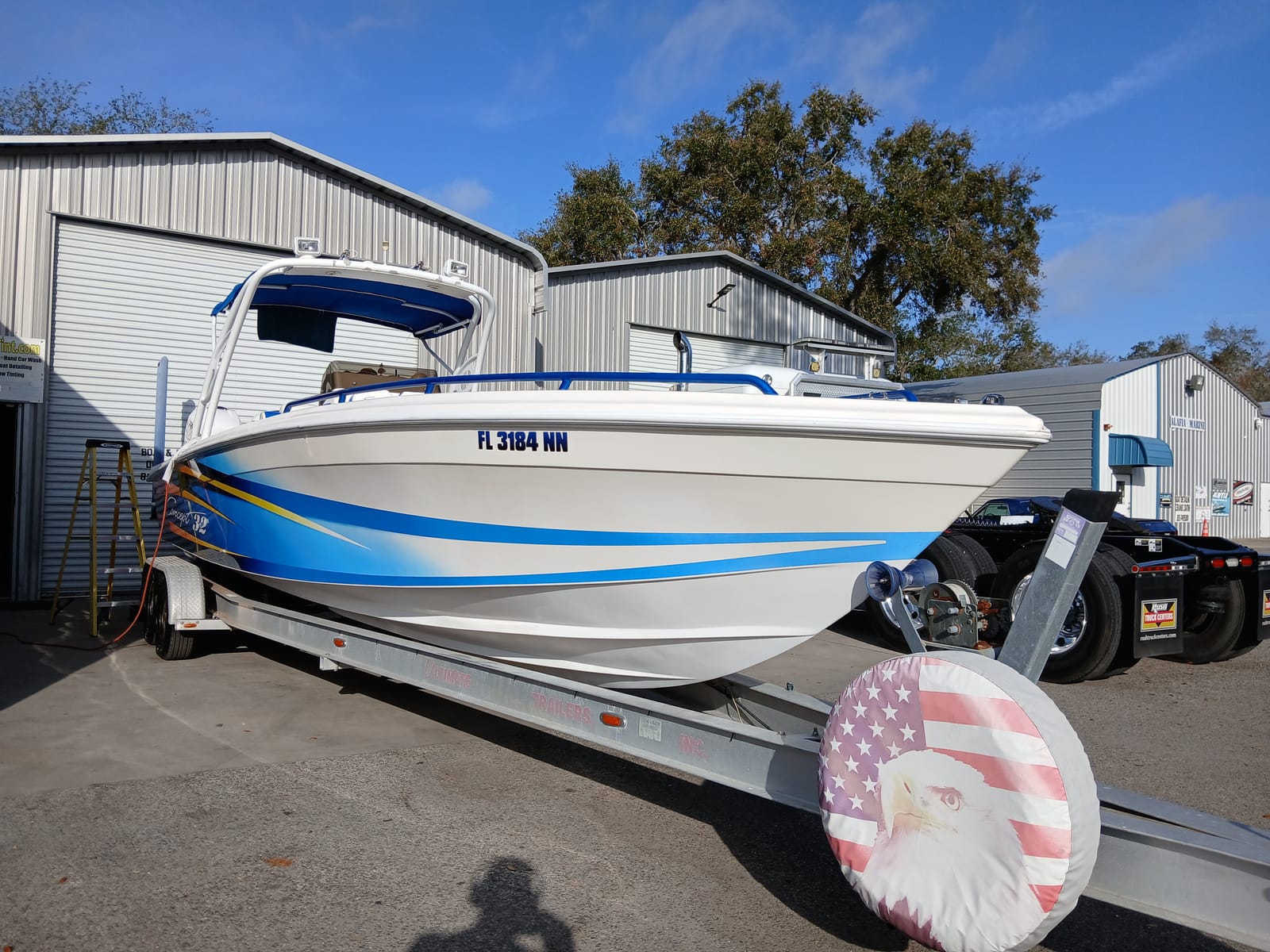
Every boat that lives in the Florida sun needs something between its gelcoat and the UV. The question is what. Wax, sealant, and ceramic coating all protect gelcoat, and they are very different in how long they last, what they cost, and how much prep they need. This guide lays them side by side.
Short answer
Is ceramic coating better than wax for a boat?
For a boat kept in the Tampa Bay sun, ceramic coating usually beats wax. It bonds to the gelcoat, protects far longer, resists staining, and makes washing much easier. Wax costs less, goes on fast, and is easy to refresh, but it wears off quickly in Florida heat. Sealants sit in between on cost and lifespan.
The job all three do
Gelcoat breaks down under UV light, and salt and heat speed it up. All three products work the same basic way: they put a layer on top of the gelcoat that takes the exposure, so the gelcoat underneath stays healthy and glossy. The differences are in what that layer is made of, how well it holds on, and how long it lasts.
Marine wax
Marine wax, often carnauba-based or a blend, sits on top of the gelcoat. It gives a warm, rich gloss and some UV protection. It is easy to apply, inexpensive, and simple to put back on when it wears.
Its weakness is durability. Wax does not bond to the surface. Sun, heat, salt, and washing all wear it away, and in Florida that happens quickly. A boat that relies on wax needs it often to stay protected. Miss a few applications, and the gelcoat is exposed again.
Synthetic sealant
A synthetic sealant is made from polymers instead of natural wax. It forms a tougher layer that handles heat better and usually lasts longer than wax. The gloss is often sharper and more glassy. Cost and effort are close to wax.
Sealants are a good middle ground for owners who want more time between applications without the bigger commitment of a coating.
Ceramic coating
A marine ceramic coating is a liquid that bonds to the gelcoat and cures into a hard, glass-like layer. It is a different category from wax and sealant. Instead of sitting on top and wearing away quickly, it becomes part of the surface and holds on for far longer.
The benefits owners notice most are a lasting gloss, far less oxidation, and much easier washing. Water beads and rolls off, salt and bird droppings rinse away, and stains have a harder time setting in. Many owners find the boat simply looks clean longer.
The Doctor is a certified installer for Ceramic Pro and System X. Both are professional coating systems with their own products and application steps.
Side by side
Here is how the three compare on the things that matter most to a Florida boat owner:
- Cost up front: wax is lowest, sealant is close, ceramic coating is highest.
- Prep: wax and sealant need a clean, polished surface. Ceramic coating needs the gelcoat fully corrected first.
- How long it lasts: wax is shortest in Florida heat, sealant is longer, ceramic coating is far longer.
- Washing: wax and sealant help a little. Ceramic coating makes washing much easier.
- Time to apply: wax and sealant are quick. A full correction and coating can take up to three days.
Why prep matters most for ceramic
A ceramic coating is clear and hard, and it locks in whatever is under it. If the gelcoat is oxidized or hazy when it is coated, it stays that way under a tough shell. That is why every coating starts with oxidation removal and polishing until the gelcoat is right.
This is also why coating costs more. Most of the work is the correction, not the coating itself. The upside is that you get the gelcoat at its best and then keep it that way.
Which one fits your boat
There is no single right answer for every boat. Think about how long you plan to keep it, where it lives, and how much time you want to spend on upkeep.
- Choose wax if you want the lowest cost today, you enjoy waxing it yourself, or you plan to sell soon.
- Choose a sealant if you want longer protection than wax at a similar cost.
- Choose a ceramic coating if you plan to keep the boat, it lives in the water or the sun, and you are tired of removing oxidation every season.
Upkeep after you choose
Whatever you choose, regular washing keeps it working. Grime and dried salt sitting on top of any protection make it look tired and wear it faster. Rinse after salt water, wash with a pH-neutral marine soap, and skip harsh household cleaners that can strip wax and dull coatings.
A maintenance wash schedule is the easiest way to keep protection performing. A coated boat in particular rewards regular gentle washing.
What "hydrophobic" really means
You will hear coatings described as hydrophobic. It means the surface repels water. On a coated hull, water pulls into tight round beads and rolls off instead of spreading out. That matters for more than looks. Water that rolls off carries dirt and salt with it, and water that does not sit on the surface leaves fewer spots.
Wax and sealants are hydrophobic too when they are fresh. The difference is how long it lasts. As wax wears off in the sun, the beading fades and water starts to sheet and sit. A ceramic coating keeps that behavior far longer, which is a simple way to see whether your protection is still working.
Common coating myths
Ceramic coatings are sometimes oversold. Here is what a coating does not do:
- It does not make the boat maintenance free. It still needs washing. Each wash is just easier.
- It does not hide defects. It locks in whatever is under it, which is why correction comes first.
- It is not scratch proof. It is harder than wax, but it does not stop scratches from docking, fenders, or abrasive cleaning.
- It does not stop all staining. It resists stains far better, but things left to bake on for a long time can still mark it.
Thinking about cost over time
Wax looks cheaper when you compare one application to one coating. The fair comparison is over the years you own the boat. Wax needs to go back on often in Florida, and every gap in protection lets oxidation start again. Many owners who rely on wax end up paying for oxidation removal again and again.
A coating costs more on day one, because of the correction and the product. After that, the gelcoat stays protected for much longer, washing takes less effort, and big restoration jobs come around far less often. Whether that math works for you depends on how long you plan to keep the boat.
Beyond the hull
Coating systems often include products for more than gelcoat, such as glass, metal, and some trim. What makes sense depends on the boat and the product line. Ask your installer which surfaces they recommend coating, and which are better served by a different protectant.
Non-skid is a special case. Its texture is there for grip, so it needs products that will not make it slippery. Ask about it before you assume the whole deck can be coated like the hull.
Questions to ask any coating installer
Before you book a coating with anyone, ask:
- Are you certified for the coating you are recommending?
- How will you correct the gelcoat before coating it?
- How long will the boat be out of use?
- What should I do, and avoid, while the coating cures?
- How should I wash the boat afterward?
What a coated boat feels like to own
Owners who switch from wax to a coating usually notice the change on the first wash. Salt and grime that used to need scrubbing come off with a rinse and a soft mitt. Bird droppings lift instead of staining. After a rain, water beads and runs off, and the hull dries with fewer spots.
Over a season, the bigger change is what does not happen. The gelcoat does not go chalky by late summer, the color stays rich, and the yearly fight with oxidation stops. The boat still needs care, but the care is lighter and faster, and the finish stays closer to the day it was corrected.
That is the real choice between wax and ceramic: pay less now and keep working on the finish, or pay more once and spend the next seasons maintaining a finish that is already right.
Getting a recommendation
The best way to choose is to have someone look at your gelcoat. Its condition decides how much correction is needed, and that changes the cost of each option. Doctor Detail gives you a free quote before any work begins, at your dock, driveway, or marina in Gibsonton and nearby towns. Detailing and coating take a 30% deposit when you book.
Questions owners ask
Can I put wax on top of a ceramic coating?
It is usually not needed, and some products can mask the coating. Ask the Doctor which care products to use on your coating.
Does ceramic coating stop oxidation completely?
It greatly slows it by taking the UV exposure for the gelcoat. Regular washing helps it keep working.
Can you coat an older boat?
Often, yes, if the gelcoat can be corrected well. The Doctor checks the hull and tells you what to expect first.