
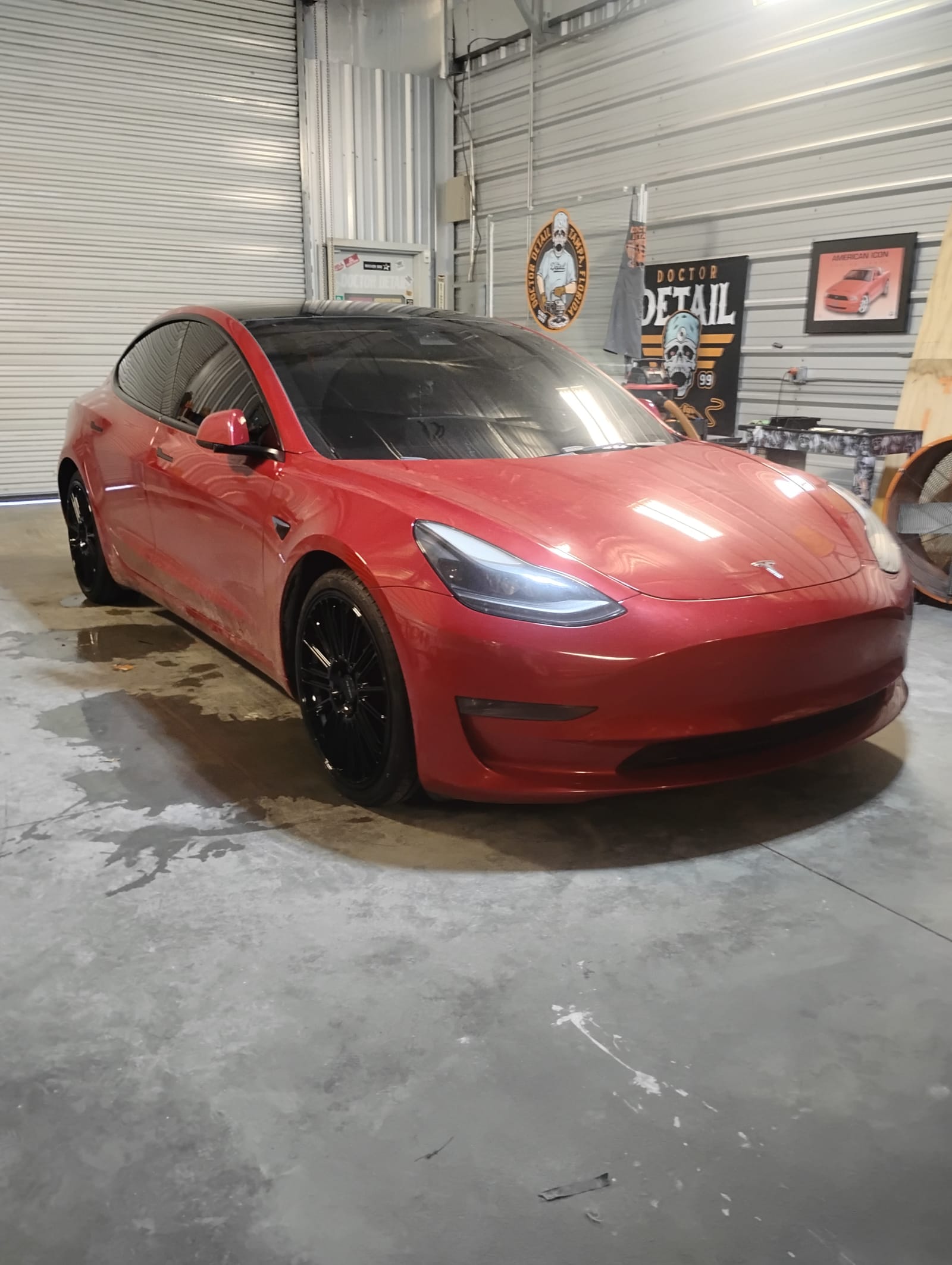
In Florida, window tint is less a style choice than a comfort and protection upgrade. A car parked in the sun gets hot quickly, and the same sun fades dashboards and seats. Ceramic film is the most popular answer for good reasons. Here is how it works, how it compares, and what to know about Florida rules before you book.
Short answer
Is ceramic window tint worth it in Florida?
For most Florida drivers, ceramic window tint is worth it. It blocks a large share of the sun's heat and UV at the glass, so the cabin stays cooler and the interior fades less, without the mirrored look of metallic films or interference with phone signals. Florida law limits how dark front side windows can be.
Why tint matters more in Florida
Strong sun most of the year means a parked car turns into an oven fast. The heat that builds up inside comes mostly through the glass. UV light coming through the same glass slowly fades and dries out dashboards, seats, and trim.
Window film works at the glass, before the heat and UV get inside. That is why it makes such a difference here.
How the main film types compare
Not all tint is the same. The main types work in different ways:
- Dyed film: the most affordable. It darkens the glass and cuts glare, but blocks less heat and can fade over time.
- Metalized film: uses metal particles to reflect heat. It works, but it can look shiny and may interfere with phone, GPS, and radio signals.
- Carbon film: blocks more heat than dyed film, with a matte look and no signal interference.
- Ceramic film: uses ceramic particles to block heat and UV without metal. Clear look, no signal interference, strong heat rejection.
What ceramic film does well
Ceramic film targets infrared light, the part of sunlight you feel as heat, and UV light, the part that fades interiors. It can block a lot of heat even in lighter shades, so you do not need very dark glass to feel the difference.
Because it has no metal, it does not look mirrored and does not interfere with electronics. That combination is why it has become the go-to film for Florida drivers who park in the sun all day.
Florida tint rules to know
Florida law sets limits on how dark and how reflective window tint can be. Darkness is measured as visible light transmission, the percentage of light the glass and film let through. As a general guide under Florida Statutes 316.2953 and 316.2954:
- Front side windows must let in more than 28% of light, on cars and on SUVs, trucks, and vans.
- On cars, rear side windows and the back window must let in more than 15% of light.
- On SUVs, trucks, and vans, rear side windows and the back window must let in more than 6% of light.
- The windshield can only have non-reflective tint above the manufacturer's AS-1 line.
- Medical exemptions exist for people who need darker tint.
Rules, continued
Laws change, and the details depend on your vehicle. Before you choose a shade, ask your installer what is legal for your car, and check the current statute if you are unsure. A certified installer can walk you through the options that keep you within the law.
Why prep and install matter
The film is only as good as the install. Dust, residue, or a fingerprint left on the glass shows up as a bubble or speck under the film. Edges need to be cut clean so the film does not peel. That is why careful glass prep is the first step of every tint job.
Doctor Detail installs ceramic window film as a certified window tinting installer. Every window is cleaned and prepped before the film goes on, so the finish is clear and the edges are clean. Most vehicles are done in a few hours.
Caring for new tint
New film needs a little time to cure. For the first few days, keep the windows rolled up so the film can bond, and do not worry about a slight haze or small water pockets at first, which usually clear as the film cures. After that, clean tinted windows with a soft cloth and an ammonia-free cleaner.
What to ask before you book
A few questions help you compare installers and films:
- What type of film is it, and is it ceramic?
- Which shades are legal for my vehicle?
- How is the glass prepped before install?
- How long will it take?
- Is there a deposit to book?
The terms on a tint spec sheet
Tint brands publish numbers that can be confusing. These are the ones that matter:
- VLT (visible light transmission): how much visible light gets through. A lower number means darker tint. This is what Florida law measures.
- IR rejection: how much infrared light, the heat you feel, the film blocks. Ceramic films are known for strong IR rejection.
- UV rejection: how much ultraviolet light is blocked. This is what protects your skin and your interior from fading.
- TSER (total solar energy rejected): an overall measure of how much of the sun's energy the film keeps out. It is often the best single number for comparing heat performance.
Myths about tint
A few common beliefs lead drivers to the wrong film:
- "Darker is cooler." Not always. A light ceramic film can block more heat than a dark dyed film.
- "Factory privacy glass already does it." Factory privacy glass is darkened glass. It cuts some light, but it often blocks little heat. Ceramic film over it can make a real difference.
- "All tint bubbles eventually." Bubbling usually comes from cheap film or a poor install. Quality film installed on well-prepped glass should stay clear.
- "Tint is only for looks." In Florida, the comfort and interior protection are the main reasons most people tint.
Choosing a shade
Start with what is legal for your vehicle, then think about how you drive. If you drive a lot at night, a lighter shade on the front side windows keeps visibility easy. If the car sits in the sun all day, heat rejection matters more than darkness, and ceramic film delivers that in lighter shades.
It helps to see shades in person on a real car before you decide, because a percentage on paper does not always match what you expect.
Trucks, SUVs, and vans
Florida allows darker rear windows on SUVs, trucks, and vans than on cars, and many of these vehicles come with factory privacy glass in the back. Adding ceramic film to the front side windows and over the rear glass is a common way to cut heat in a large cabin that takes a long time to cool down.
Back glass and defroster lines
Rear windows are often the hardest glass on a car to tint. Many are steeply curved, so the film has to be shaped to the glass before it is installed. Most also carry defroster lines, the thin heating strips printed on the inside of the glass, which must be treated gently during prep and install so they keep working.
This is where an installer's care shows. A clean rear window with no lifted edges, no bubbles, and working defroster lines is a good sign the whole job was done right.
Sunroofs, small quarter windows, and the narrow glass on some trucks take the same care. Ask which windows are included in the quote, so you know exactly what the finished car will look like.
Tint as part of a full detail
Tint goes on the inside of the glass, so the cleaner the glass and the cabin, the better the result. That makes tint a natural fit with an interior detail: the cabin is cleaned, the glass is prepped, and the film goes on a car that is already clean inside. Many drivers also coat the paint in the same visit, so the whole car is protected from the Florida sun at once.
If you are already planning a detail, ask about tint at the same time. One visit, one quote, and the car comes back cooler, cleaner, and protected.
Tint and safety
Tint can also help in ways people do not think about. Film holds shattered glass together better than bare glass in many cases, and it cuts glare from the sun and from headlights. It also adds privacy, which keeps valuables less visible to anyone walking past a parked car.
The trade-off is visibility at night with very dark tint. That is one more reason to choose a legal shade and to consider ceramic film, which gives strong heat rejection without going as dark.
Tint with Doctor Detail
Doctor Detail is based in Gibsonton and installs ceramic window tint for cars, trucks, and SUVs. Window tinting takes a 35% deposit when you book, and you can pay by card, cash, or transfer. Many customers book interior detailing or a ceramic coating in the same visit. Call or text the Doctor at (656) 218-5137 for a free quote.
Questions owners ask
Does ceramic tint have to be dark to work?
No. Ceramic film blocks heat with ceramic particles, not just darkness, so lighter shades can still cut a lot of heat.
Will tint interfere with my phone or GPS?
Ceramic film has no metal, so it does not interfere with phone, GPS, or radio signals the way some metalized films can.
How long does window tinting take?
Most vehicles are done in a few hours. The Doctor confirms the time when you book.